

Plumbing leads are only valuable when they connect you with customers who genuinely need service and are ready to move forward. Whether you’re looking to buy plumbing leads to fill gaps in your schedule or scale into new service areas, the real goal isn’t volume alone — it’s relevance. The right inquiries should match your service area, your job types, and your team’s capacity.
For plumbing service providers, consistency matters. A steady flow of qualified opportunities helps reduce slow weeks, improve response times, and keep technicians focused on billable work instead of chasing mismatched requests. Lead programs work best when they prioritize clear job details, accurate contact information, and timely delivery so your team can follow up while the customer is still searching.
The focus is simple: connect you with plumbing leads that align with your services, support fast follow-up, and give your business the structure it needs to grow predictably — without unrealistic promises or inflated claims.
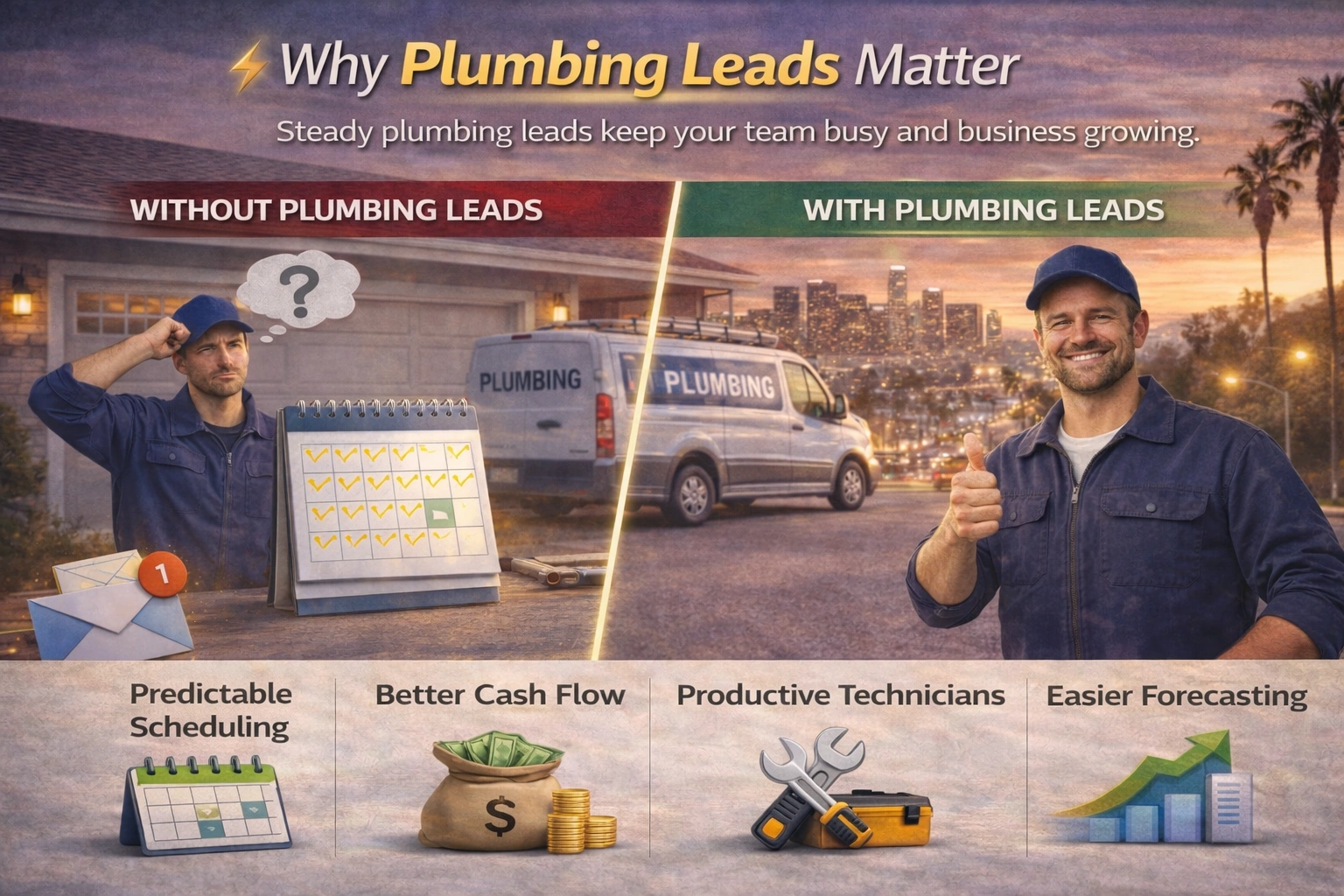
Why Plumbing Leads Matter for Plumbing Contractors
A consistent flow of plumbing contractor leads helps create stability in a business where demand can fluctuate week to week. Weather changes, seasonal spikes, and emergency surges can create unpredictable workloads, making it difficult to plan staffing and manage schedules effectively. When you have reliable plumbing service leads coming in, it becomes easier to keep crews booked, reduce downtime, and avoid the stress of sudden slow periods.
Steady lead flow supports better forecasting. Instead of scrambling to fill gaps in the calendar, your team can focus on estimating, scheduling, and delivering quality service. Access to local plumbing leads also improves efficiency, since responding to requests within your service area reduces travel time and increases the likelihood of converting inquiries into booked jobs.
Beyond volume, relevance matters. The best plumbing contractor leads align with the services you actually offer—whether repair, installation, or commercial work—so your team spends more time quoting real opportunities and less time filtering out mismatched requests. Over time, this consistency helps strengthen operations, improve cash flow planning, and support long-term business growth.
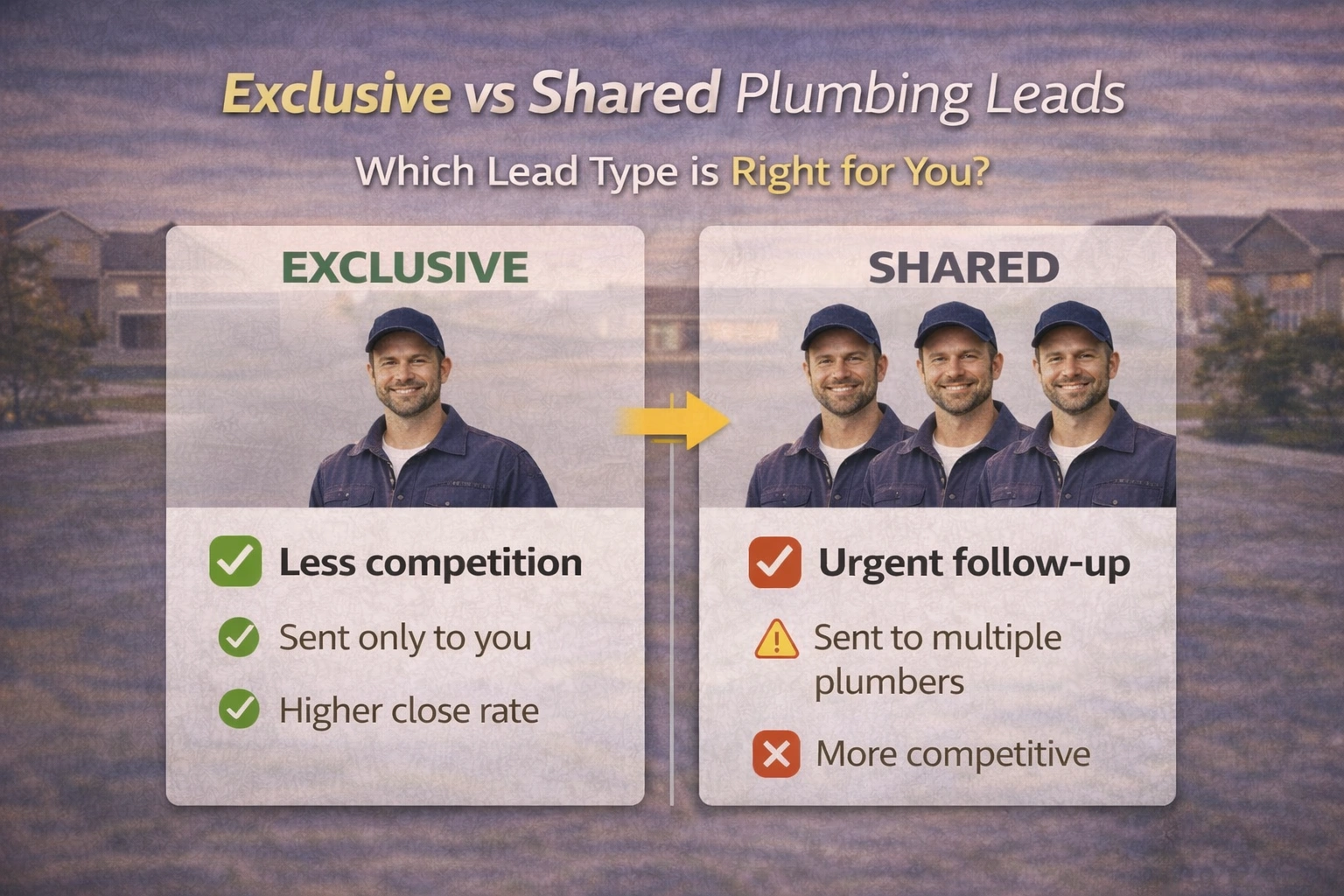
Exclusive Plumbing Leads vs Shared Plumbing Leads
When evaluating plumbing leads for sale, one of the most important decisions is whether to choose shared distribution or an exclusive lead option. The difference comes down to how many contractors receive the same request and how much competition you face when following up.
Exclusive plumbing leads are typically delivered to one contractor (or limited distribution), reducing overlap and giving your team a clearer opportunity to speak directly with the customer. This can help improve conversation quality and reduce price-driven competition.
Shared leads, on the other hand, are distributed to multiple contractors. While this increases competition, it can sometimes provide higher overall volume and may make sense when testing a new service area or expanding into new job types.
At-a-Glance Comparison
| Lead Type | What It Means | Best For | What to Expect |
|---|---|---|---|
| Exclusive plumbing leads | Sent to one contractor (or limited distribution) | Protecting margins and reducing competition | Cleaner conversations and less price pressure |
| Shared plumbing leads | Sent to multiple contractors | Increasing volume or testing new markets | Faster follow-up required and more comparison shopping |
The right choice depends on your goals—whether you prioritize lead volume or a more controlled, lower-competition environment.
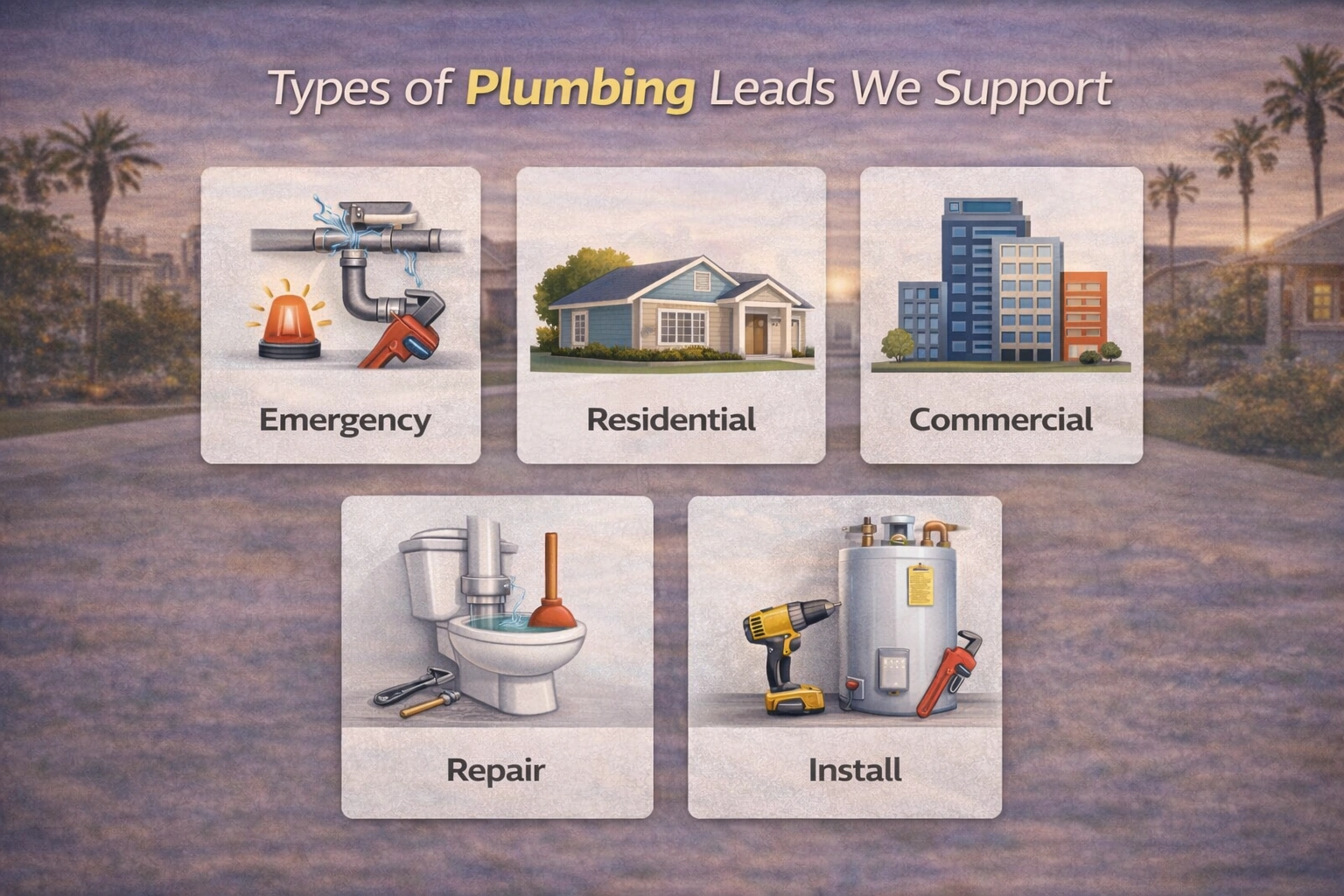
Types of Plumbing Leads We Support
Not every plumbing job looks the same. Some requests are urgent and time-sensitive, while others are planned projects that require quoting, scheduling, and coordination. Our plumbing leads program is designed to support different job categories so plumbing contractors can focus on the type of work that fits their team, capacity, and service area.
Below are the primary categories of plumbing leads we support. These are general classifications to help align job type with your business goals—they are not guarantees of volume or job size.
Emergency Plumbing Leads
Emergency plumbing leads typically involve urgent issues such as active leaks, burst pipes, water damage concerns, or situations where immediate service is requested. These leads often require fast follow-up, as customers may contact more than one provider when the issue feels urgent. Response speed plays a major role in conversion.
Residential Plumbing Leads
Residential plumbing leads involve homeowners requesting service, repairs, upgrades, or installations in their homes. These may include routine maintenance, fixture replacements, water heater services, or general plumbing troubleshooting. Residential work often benefits from clear communication and flexible scheduling.
Commercial Plumbing Leads
Commercial plumbing leads generally come from businesses, property managers, or facilities requiring plumbing services for offices, retail spaces, or multi-unit properties. These requests may involve different scopes, approval processes, or timelines compared to residential work.
Plumbing Installation Leads
Plumbing installation leads typically involve planned projects such as new fixture installs, system upgrades, repiping, or remodel-related plumbing work. These leads often require quoting, consultation, and defined scheduling rather than immediate dispatch.
Plumbing Repair Leads
Plumbing repair leads focus on diagnosing and fixing existing issues, whether minor or more involved. These may range from leak detection to system repairs and component replacements. Clear job details and fast response help move these opportunities toward booked service calls.
By aligning lead type with your preferred job categories, you can better manage scheduling, crew allocation, and follow-up strategy—keeping your pipeline focused on the work that fits your business.
How Plumbing Lead Generation Works
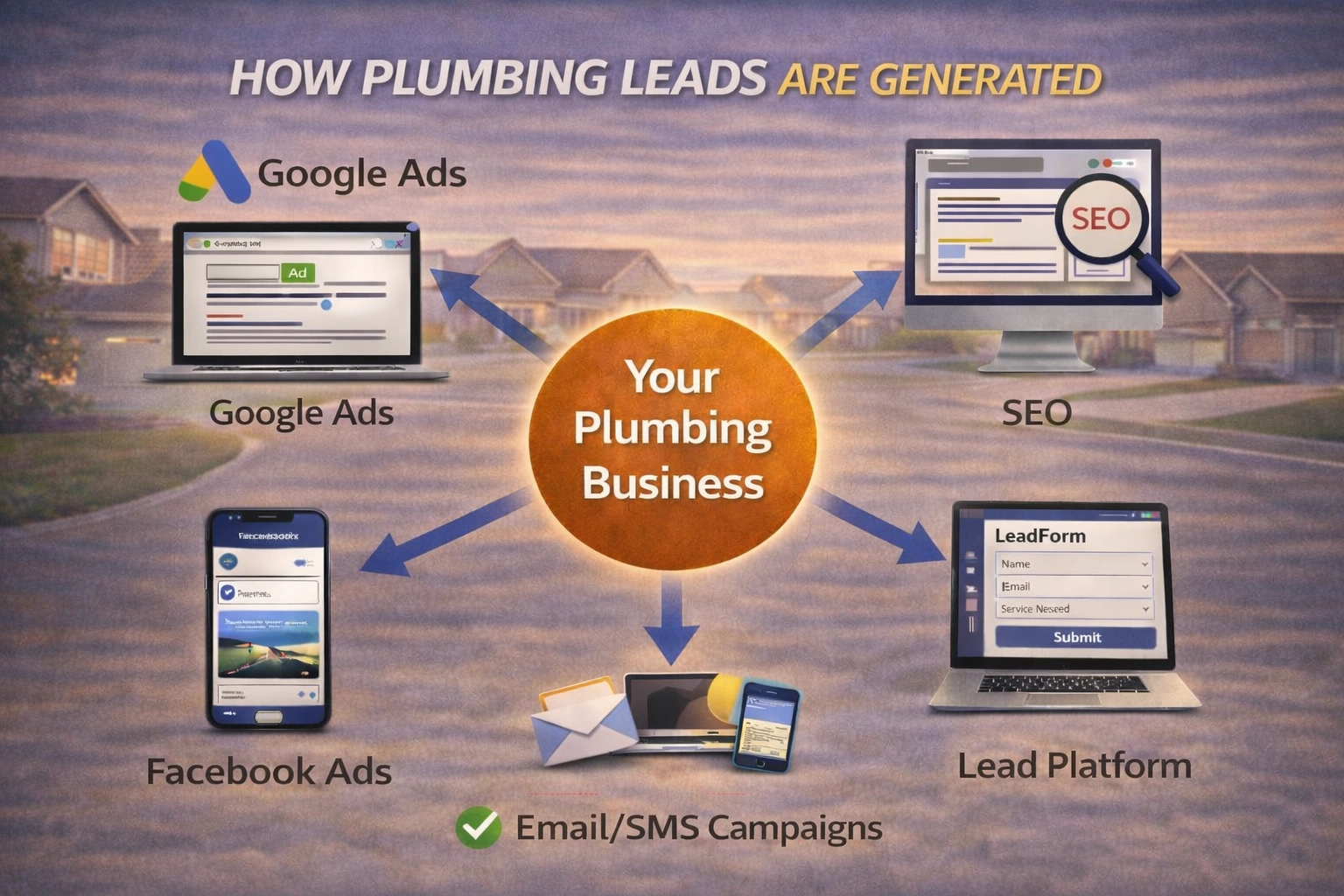
Plumbing lead generation is the process of connecting plumbing contractors with property owners actively searching for service. Instead of relying only on word-of-mouth or inconsistent referrals, plumbing lead generation services use structured marketing channels to attract inquiries and route them to plumbing businesses based on service area and job type.
Many contractors search for plumber marketing leads because they don’t want to manage every marketing channel themselves. Running SEO, Google Ads, tracking calls, building landing pages, and optimizing campaigns takes time. Lead programs are designed to handle the marketing side so plumbers can focus on scheduling, estimating, and completing jobs.
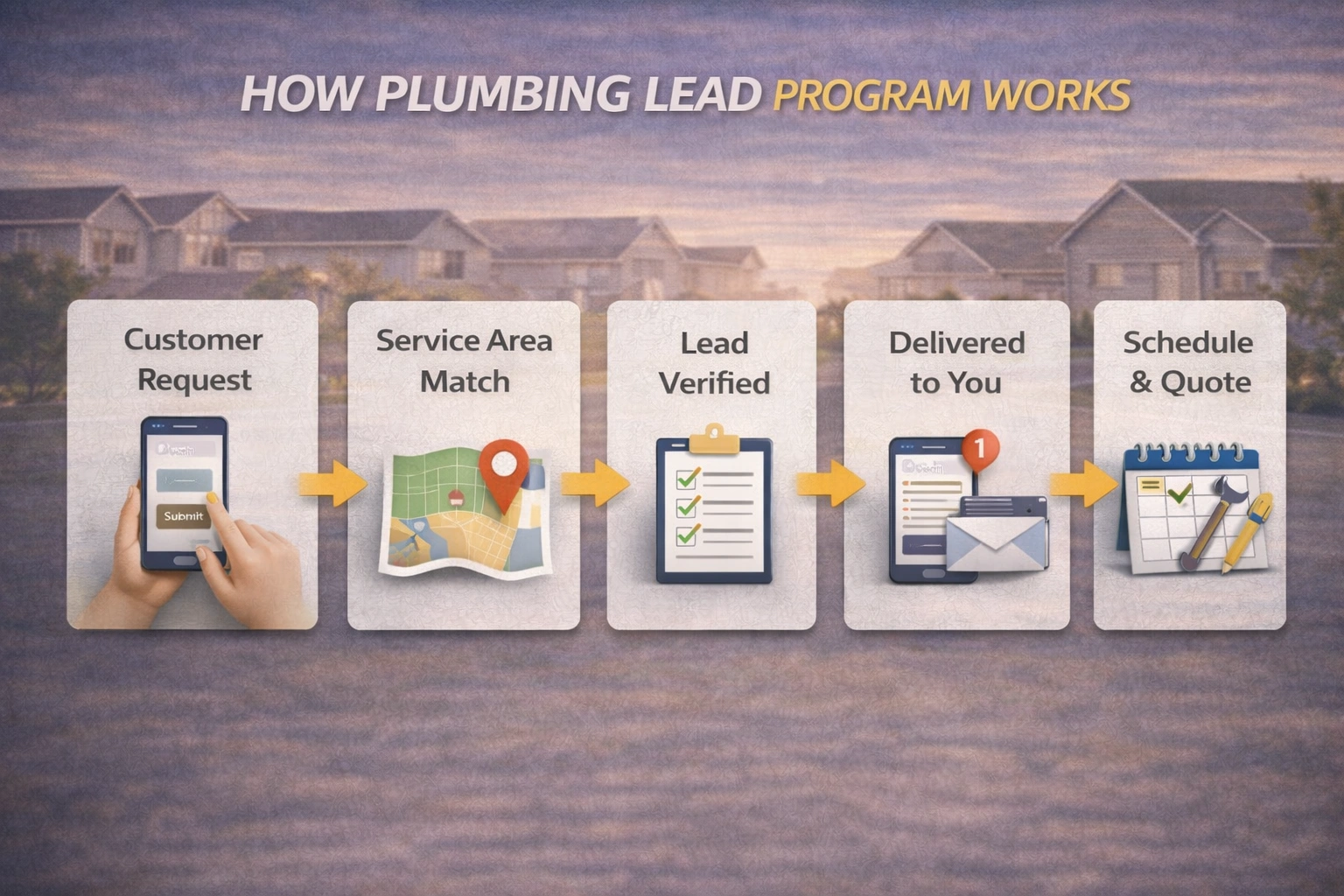
While every program is different, the general process typically looks like this:
- Attract demand through multiple channels: SEO helps capture organic search traffic, while Google Ads can target high-intent searches in specific service areas. Partnerships and lead platforms can add additional inbound opportunities.
- Capture job details clearly: Requests typically collect the basics needed for follow-up—service location, general job type, urgency, and contact details—so your team isn’t guessing what the customer needs.
- Route leads based on fit: Leads are matched to service-area coverage and the type of work you take on, helping reduce out-of-area requests and mismatched job types.
- Deliver leads quickly for faster response: Timely delivery helps your team respond while the customer is still actively searching, which can improve contact and booking opportunities.
- Track and improve over time: Reviewing lead outcomes and response patterns helps you refine follow-up workflows and understand what types of plumbing lead generation efforts perform best in your market.
For plumbing contractors looking to get plumbing leads consistently, combining multiple acquisition methods is often considered the best way to get plumbing leads without relying on a single source. When structured correctly, these systems help generate leads for plumbers in a way that supports steadier pipeline management and clearer ROI tracking over time—without promising guaranteed outcomes.
What Makes a Qualified Plumbing Lead
Not every inquiry is worth your team’s time. Qualified plumbing leads should match your service area, include enough detail to quote confidently, and arrive while the customer is still actively looking for help. Many lead programs also describe verified plumbing leads as requests that pass basic checks to reduce obvious spam, duplicates, or incomplete submissions—without claiming perfection. The goal is to prioritize high-intent plumbing leads that are more likely to turn into real conversations and booked work.
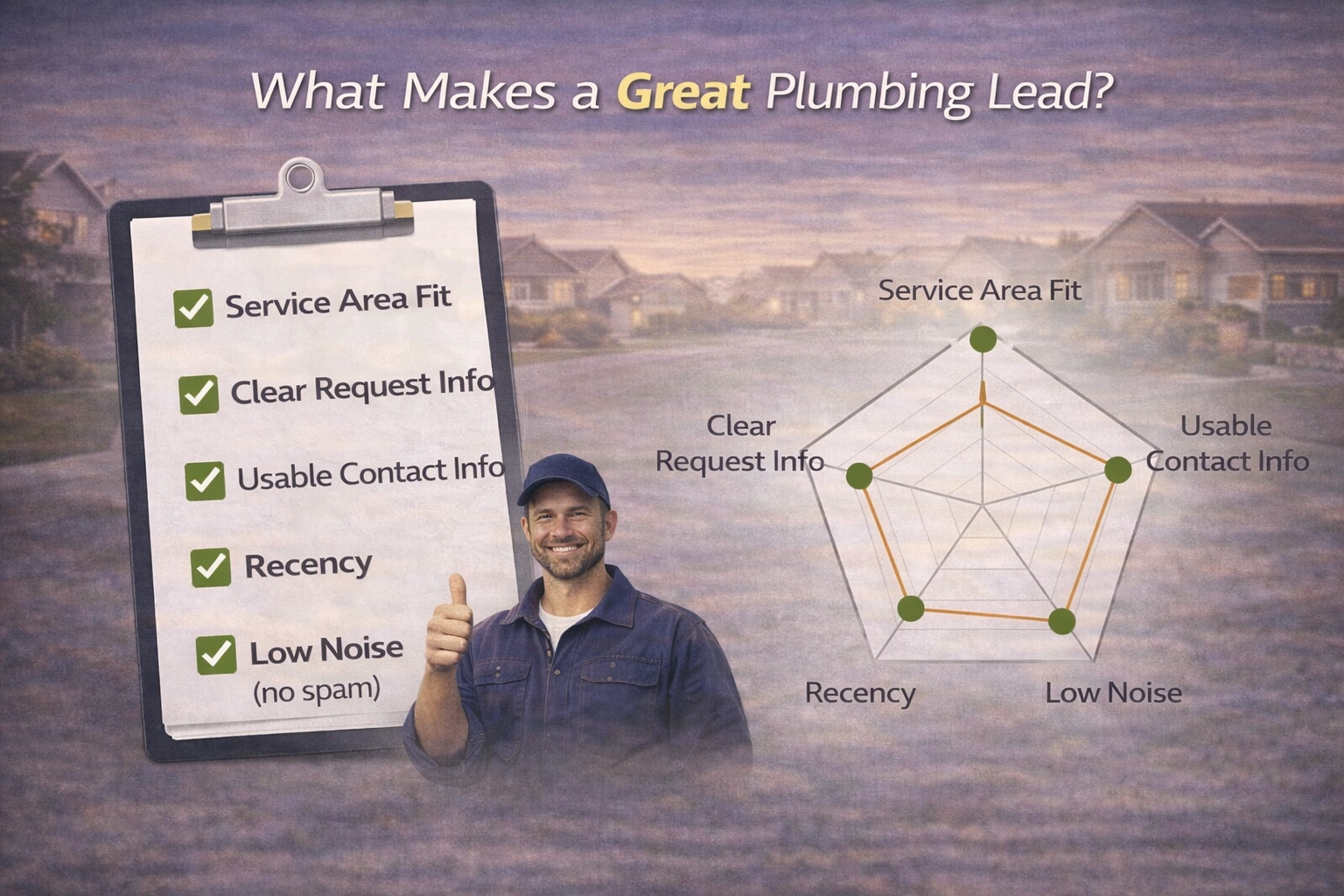
Use this quick checklist to evaluate lead quality:
- Service-area fit: The request comes from the cities, zip codes, or radius you actually cover—so you’re not wasting time on out-of-area calls.
- Clear request information: The lead includes a general description of the issue or job type (repair vs installation, residential vs commercial, urgent vs scheduled).
- Usable contact details: A working phone number and/or email is provided so your team can respond quickly and confirm next steps.
- Recency: The lead is delivered quickly enough that your team can follow up while the customer is still in decision mode.
- Lower noise: Fewer duplicates, incomplete forms, or unclear requests means less time spent sorting and more time quoting.
When these basics are in place, your follow-up becomes faster, your quoting becomes easier, and your close rate typically improves naturally because you’re responding to better-fit opportunities.
Real-Time Lead Access and Dashboard Management
Speed and organization both matter when handling real-time plumbing leads. When a new request comes in, your team should be able to view the details quickly and decide on the next step without digging through multiple inboxes or spreadsheets.
With secure client login access, you can view incoming leads inside your account dashboard, where requests are organized in one place. This makes it easier to review contact information, check service-area fit, and see basic job details before reaching out.
Your dashboard functions as a simple lead management system, helping you:
- View new plumbing leads in one location
- Review request details and contact information
- Track follow-up attempts and outcomes
- Keep lead records organized for future reference
If questions come up about a specific lead or your account, support is available by phone or email. The goal is straightforward: clear visibility into your leads and a practical way to manage them without adding unnecessary complexity.
Plumbing Leads Pricing and ROI
When evaluating plumbing leads pricing, it’s important to look beyond the surface number. The real question isn’t simply what the plumbing leads cost, but whether the opportunities fit your service area, job types, and capacity — and whether your team can respond quickly enough to convert them.
In many cases, a plumbing pay per lead model is a common structure. This means you pay for each qualified lead delivered, rather than committing to large upfront marketing retainers. Pricing can vary based on factors such as:
- Service area competitiveness
- Residential vs. commercial request types
- Urgency (emergency vs. scheduled jobs)
- Exclusive vs. shared distribution
- Market size and demand levels
However, cost alone doesn’t determine performance. ROI typically depends on:
- Service-area fit: Are you receiving leads from areas you actually serve?
- Lead quality: Do requests include usable contact details and clear job intent?
- Response speed: Faster follow-up often improves contact and booking rates.
- Average job value: Higher-ticket services can justify higher per-lead pricing.
Instead of focusing only on the lowest possible price, many plumbing contractors track close rate, average job size, and response time to understand their true return. When the right-fit leads meet strong follow-up, the investment tends to make more sense over time.
Best Practices for Converting Plumbing Leads
Getting plumbing leads is only part of the equation — how you handle them determines the outcome. Many local plumbers find that small operational improvements can significantly increase booking rates without increasing lead volume.
Here are a few practical best practices:
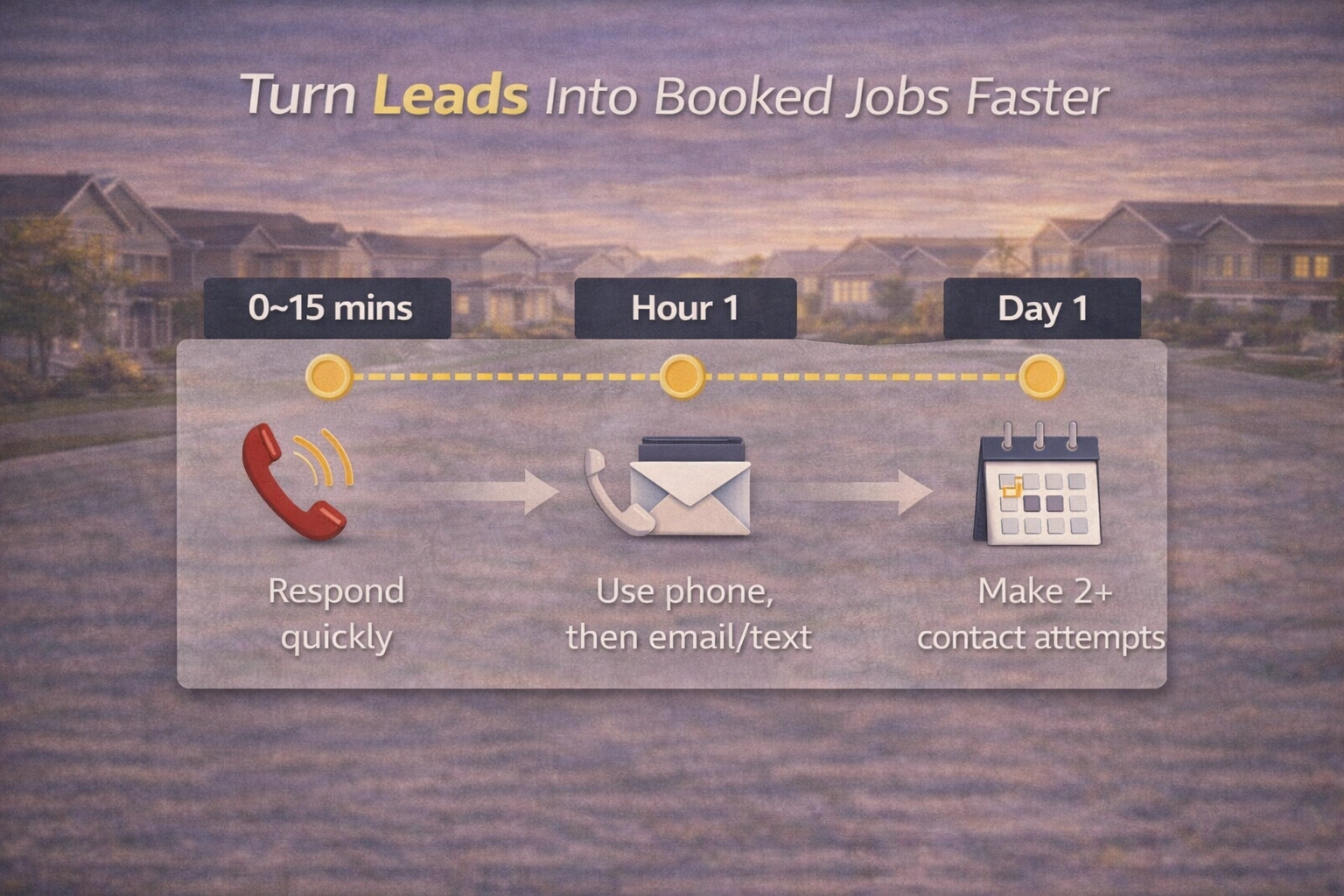
- Respond quickly: The sooner you contact a lead, the higher the chance they’re still actively looking. Fast follow-up often improves connection rates and scheduling opportunities.
- Use multiple contact methods: Call first when possible, especially for urgent requests. Follow up with text or email if there’s no answer. Different customers prefer different communication styles.
- Confirm details early: Clarify location, job type, and timing so you can qualify the opportunity before investing too much time.
- Make more than one attempt: If you don’t reach them immediately, try again later the same day or the next business day.
- Track outcomes: Log contact attempts, booked jobs, and lost opportunities so you can see which lead types and response times perform best.
When local plumbers combine timely follow-up with simple tracking, they’re better positioned to turn incoming plumbing leads into scheduled jobs and long-term customers.
Get Started: Buy Plumbing Leads
If you’re ready to buy plumbing leads that align with your service area and job types, the next step is choosing a structure that fits your team’s capacity and growth goals. As a long-standing plumbing lead provider, TOLM (Taylor Online Marketing) focuses on delivering opportunities designed to support steady pipeline flow — without overcomplicating the process.
Whether you’re looking to increase volume in a specific market or test new service areas, we work with plumbing businesses that want clearer visibility into their leads and more consistent inbound demand. Our approach is built around service-area fit, usable request details, and straightforward pricing — so you can evaluate performance based on real results.
If you’ve compared other plumbing lead companies or reviewed options for plumbing company leads, you already know that quality and responsiveness matter more than promises. The best leads for plumbers are the ones that match your coverage area and allow your team to respond quickly and professionally.
To get started, contact TOLM to review availability in your market, discuss your target areas and job types, and see which lead options make the most sense for your business.